Online Calculator Lab

📐 4 Free Geometry Calculators

Geometry Calculators

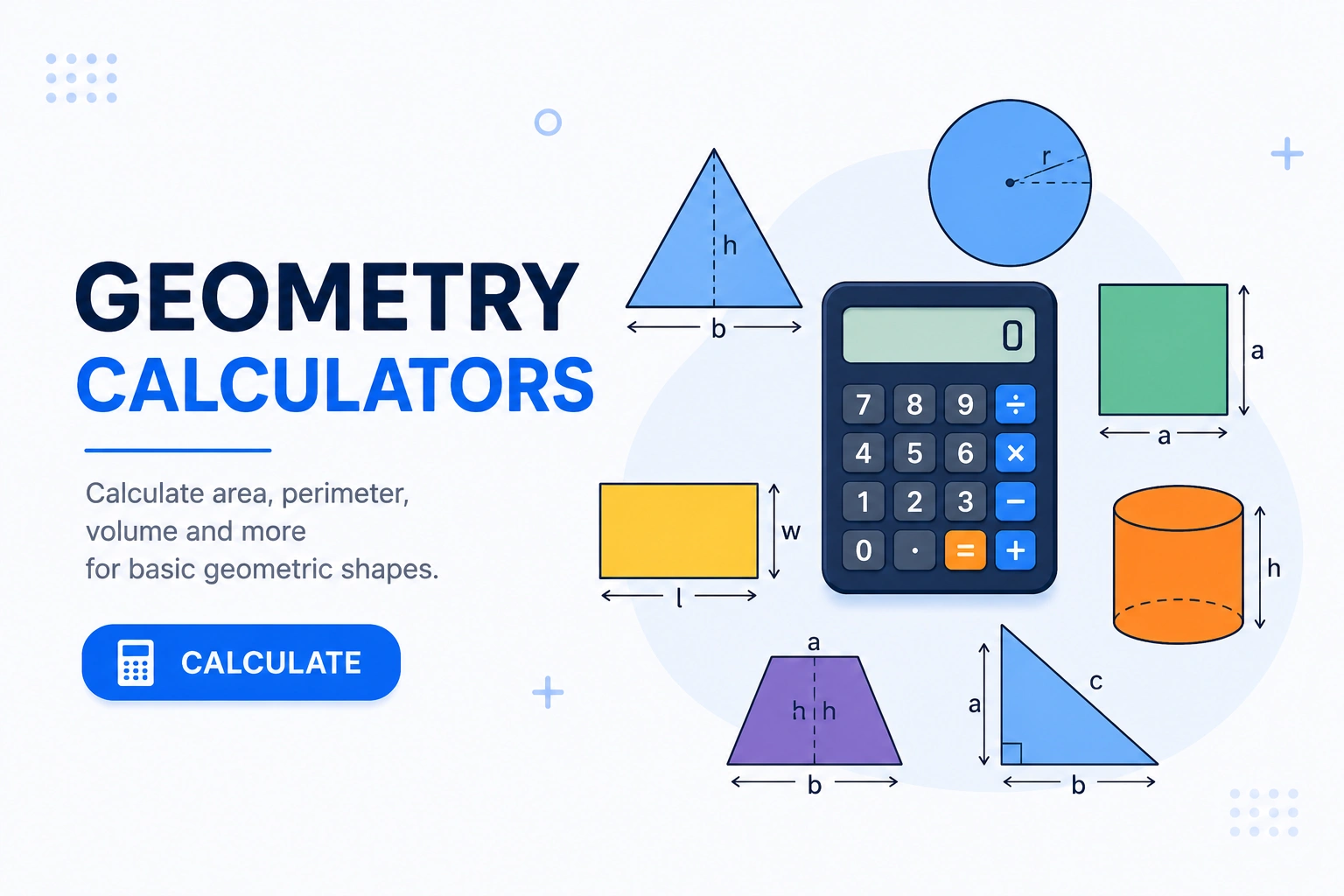
Area, perimeter, diagonal, circumference, arc length, and sector area for circles, rectangles, squares, and triangles — with visual diagrams and verified formulas.

All Geometry Calculators (4)

Click any calculator to open it — all tools are free, instant, and require no sign-up.
Circle Formulas and Quick Reference

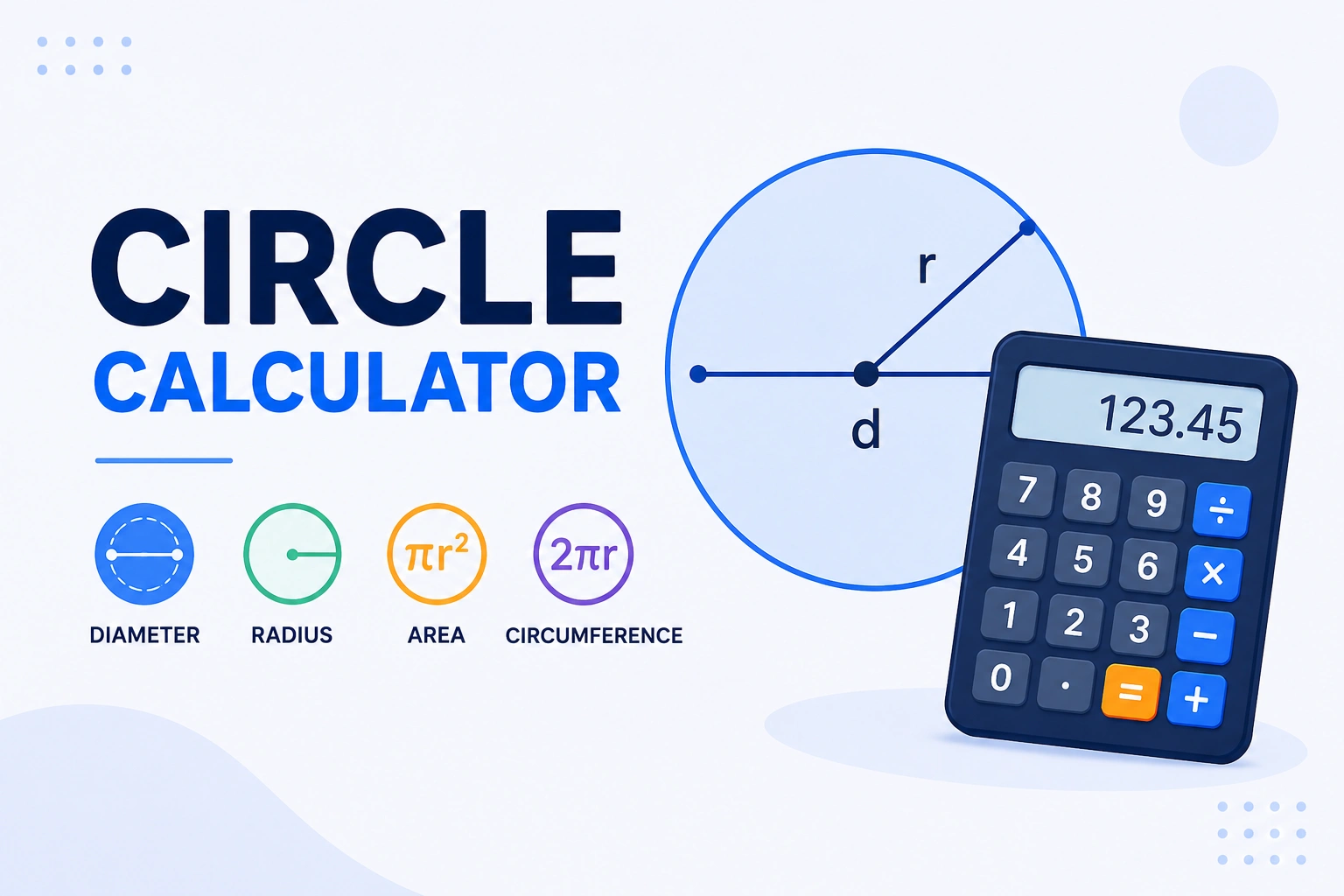
All circle properties connect through the radius (r) and the constant π ≈ 3.14159. Knowing any one measurement — radius, diameter, area, or circumference — lets you calculate all the others using the formulas below.

Circle Formulas: Diameter = 2 × r Area = π × r² Circumference = 2 × π × r Worked example — radius = 7: Diameter = 2 × 7 = 14 Area = π × 7² = π×49 = 153.9380 Circumference = 2 × π × 7 = 43.9823 Reference table (Python-verified): r=1: Area=3.1416 Circ=6.2832 r=3: Area=28.2743 Circ=18.8496 r=5: Area=78.5398 Circ=31.4159 r=7: Area=153.9380 Circ=43.9823 r=10: Area=314.1593 Circ=62.8319

Rectangle Formulas

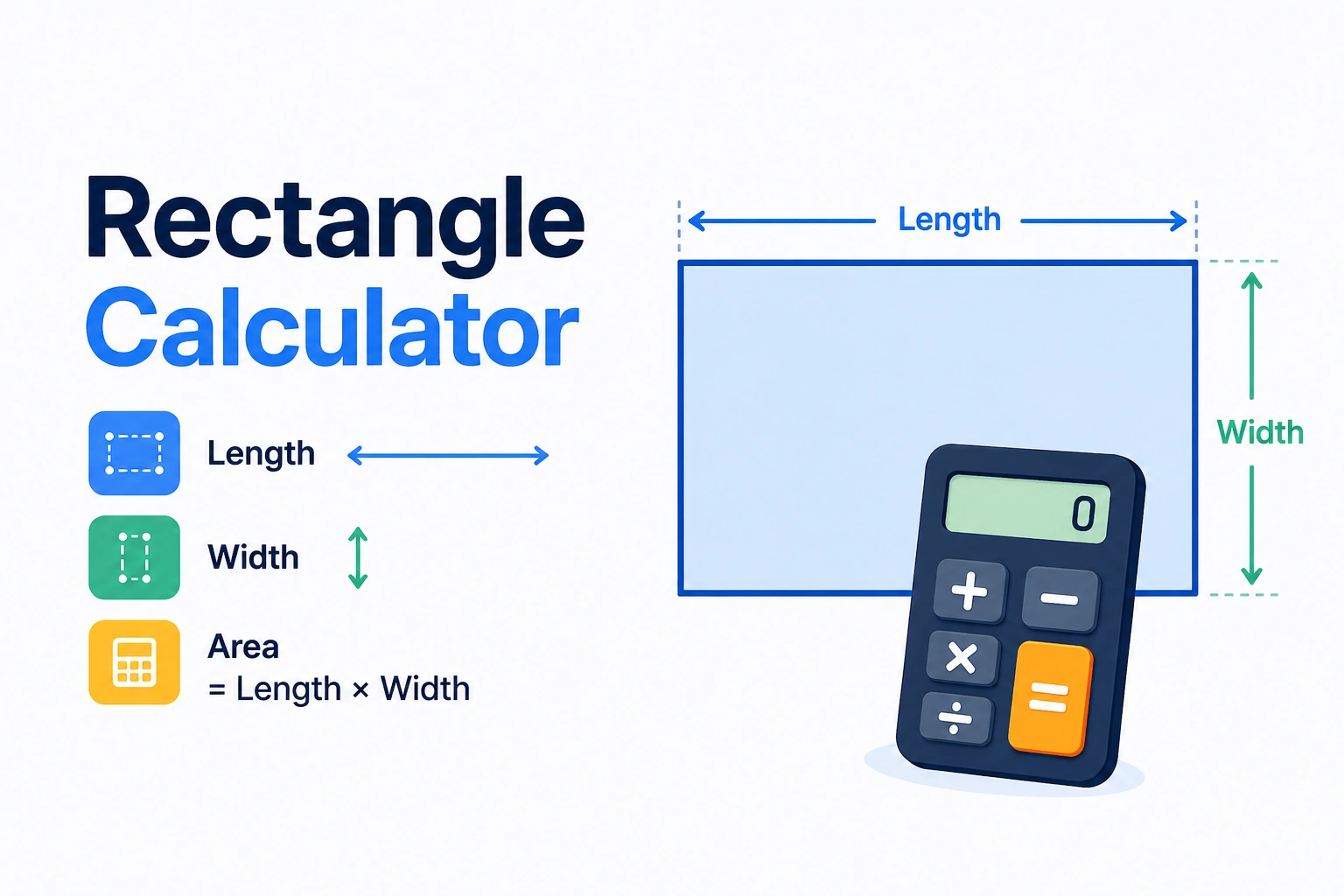
A rectangle has four right angles with opposite sides equal. Given length (l) and width (w), the three key properties are area, perimeter, and diagonal. The diagonal uses the Pythagorean theorem since the diagonal splits the rectangle into two right triangles.

Rectangle Formulas: Area = length × width Perimeter = 2 × (length + width) Diagonal = √(length² + width²) Worked example — 12 × 8: Area = 12 × 8 = 96 Perimeter = 2 × (12 + 8) = 40 Diagonal = √(12² + 8²) = √(144+64) = √208 = 14.4222 More examples (verified): 10×5: Area=50, Perim=30, Diag=11.1803 15×10: Area=150, Perim=50, Diag=18.0278 20×12: Area=240, Perim=64, Diag=23.3238

Square Formulas

A square is a special rectangle where all four sides are equal. This simplifies the formulas — perimeter is just 4 times the side, and the diagonal is the side multiplied by √2 (approximately 1.41421).

Square Formulas: Area = side² Perimeter = 4 × side Diagonal = side × √2 Worked example — side = 9: Area = 9² = 81 Perimeter = 4 × 9 = 36 Diagonal = 9 × √2 = 9 × 1.41421 = 12.7279 Key relationship: Diagonal = √(2 × Area) For side=9: Diagonal = √(2×81) = √162 = 12.7279 ✓

Triangle Area — Three Methods

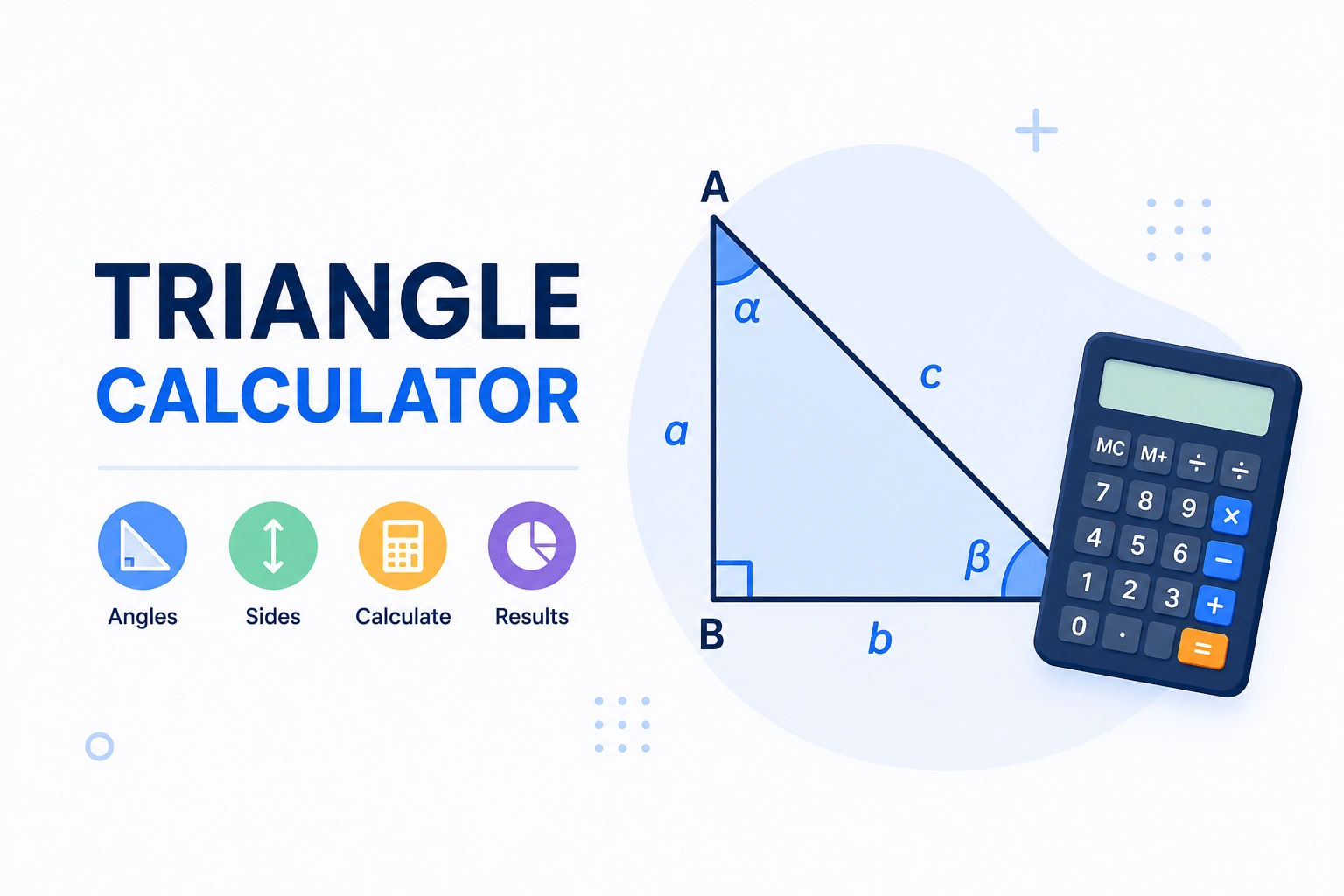
Triangle area can be calculated in different ways depending on what measurements are known. The three most common methods are the base-height formula, Heron's formula (from three sides), and the trigonometric formula (two sides and the included angle).

Method 1 — Base and Height (most common): Area = ½ × base × height Right triangle example (3-4-5): Area = ½ × 3 × 4 = 6 Perimeter = 3+4+5 = 12 Hypotenuse = √(3²+4²) = √25 = 5 ✓ Method 2 — Heron's Formula (three sides known): s = (a + b + c) ÷ 2 (semi-perimeter) Area = √(s × (s-a) × (s-b) × (s-c)) Example — sides 5, 6, 7: s = (5+6+7) ÷ 2 = 9 Area = √(9 × 4 × 3 × 2) = √216 = 14.6969 Perimeter = 5+6+7 = 18 Method 3 — Two Sides and Included Angle: Area = ½ × a × b × sin(C) (C = angle between sides a and b)
📌 3-4-5 triangle check: The right angle is always opposite the longest side (hypotenuse). A 3-4-5 triangle satisfies the Pythagorean theorem: 3² + 4² = 9 + 16 = 25 = 5². Other Pythagorean triples: 5-12-13, 8-15-17, 7-24-25. These are useful for verifying right angles in construction. Reference: Khan Academy — Pythagorean Theorem

Shape Comparison — Same Perimeter, Different Areas

Among shapes with the same perimeter, the circle always encloses the most area (isoperimetric inequality). This table compares four shapes all with perimeter = 40 units:

ShapePerimeterDimensionsArea
Circle40r = 40÷(2π) = 6.366127.32 sq units
Square40side = 10100 sq units
Rectangle4012 × 896 sq units
Rectangle4015 × 575 sq units

The circle (127.32) encloses 27% more area than the square (100) and 33% more than the 12×8 rectangle (96) — all with the same perimeter of 40. Among rectangles, the square always maximizes area for a given perimeter. Source: Math Is Fun — Geometry Reference

5 Geometry Calculation Tips

  • Area scales with the square of any linear dimension. Double the radius of a circle and the area quadruples — not doubles. A circle with r=7 has area 153.9380; r=14 gives area 615.7522 (exactly 4×). The same applies to squares and rectangles: double both dimensions and area multiplies by 4. This is why large rooms feel proportionally much bigger than the floor plan dimensions suggest.
  • The square diagonal formula (side × √2) is faster than Pythagoras for squares. For a 9×9 square: diagonal = 9 × 1.41421 = 12.7279. Using Pythagoras: √(81+81) = √162 = 12.7279 — same answer, more steps. √2 ≈ 1.41421 is worth memorizing for quick square diagonal estimates.
  • Heron's formula works for any triangle — no height needed. When you only know three side lengths (common in real measurements), Heron's formula (Area = √(s(s-a)(s-b)(s-c)) where s is the semi-perimeter) gives exact area without needing to find the height. For sides 5-6-7: s=9, Area = √(9×4×3×2) = √216 = 14.6969.
  • Circumference ÷ diameter always equals π, for every circle. This ratio — approximately 3.14159 — is the definition of π. If you measure any circular object and divide its circumference by its diameter, you get π regardless of size. It's a useful field check: if the ratio comes out far from 3.14, either the shape isn't a true circle or one measurement is off.
  • For construction and tiling, always add 10% for waste. When using geometry calculators to estimate materials (tiles, flooring, paint), calculate the exact area first, then add 10% for cuts, waste, and irregularities. For a 15×10 m (approx. 49×33 ft) room: area = 150 m² (≈ 1,615 sq ft), with 10% waste allowance order 165 m² (≈ 1,776 sq ft) of material. The construction calculators handle waste factors automatically.

Frequently Asked Questions — Geometry Calculators

Area = π × r², where r is the radius and π ≈ 3.14159. For radius 7: Area = π × 49 = 153.9380. If you know the diameter instead, use Area = π × (d/2)². If you know the circumference C, use Area = C² ÷ (4π). All three give the same result for the same circle. The circle calculator accepts any of these as input and calculates all other properties instantly.
Diagonal = √(length² + width²) — this is the Pythagorean theorem applied to the right triangle formed by the two sides and the diagonal. For a 12×8 rectangle: √(144 + 64) = √208 = 14.4222. For a 10×5 rectangle: √(100+25) = √125 = 11.1803. The rectangle calculator computes diagonal alongside area and perimeter from any length and width inputs.
Heron's formula finds triangle area from the three side lengths alone — no height needed. Steps: (1) Calculate semi-perimeter s = (a+b+c) ÷ 2. (2) Area = √(s × (s−a) × (s−b) × (s−c)). For sides 5, 6, 7: s = 9, Area = √(9×4×3×2) = √216 = 14.6969, Perimeter = 18. Use it when you have three measured side lengths but can't easily measure the height — common in land surveying and construction.
Perimeter is the total length of a shape's boundary — measured in linear units (cm, m, ft). Area is the amount of 2D space enclosed by the boundary — measured in square units (cm², m², ft²). For a 12×8 rectangle: perimeter = 2×(12+8) = 40 units (how much fencing you need), area = 12×8 = 96 sq units (how much flooring you need). Same shape, two completely different measurements answering two different practical questions.
Area = diagonal² ÷ 2. If the diagonal is 12.7279: Area = 12.7279² ÷ 2 = 161.9995 ÷ 2 ≈ 81 sq units. Verify: side = diagonal ÷ √2 = 12.7279 ÷ 1.41421 = 9, then Area = 9² = 81 ✓. This is useful when you've measured the diagonal of a square room or tile rather than the side length.
A circle always encloses the most area for any given perimeter — this is the isoperimetric inequality. With a perimeter of 40 units: a circle encloses 127.32 sq units; a square encloses 100 sq units; a 12×8 rectangle encloses 96 sq units; a 15×5 rectangle encloses only 75 sq units. Among rectangles, the square always maximizes area. This explains why circular storage tanks and cylindrical pipes are more material-efficient than rectangular ones.