
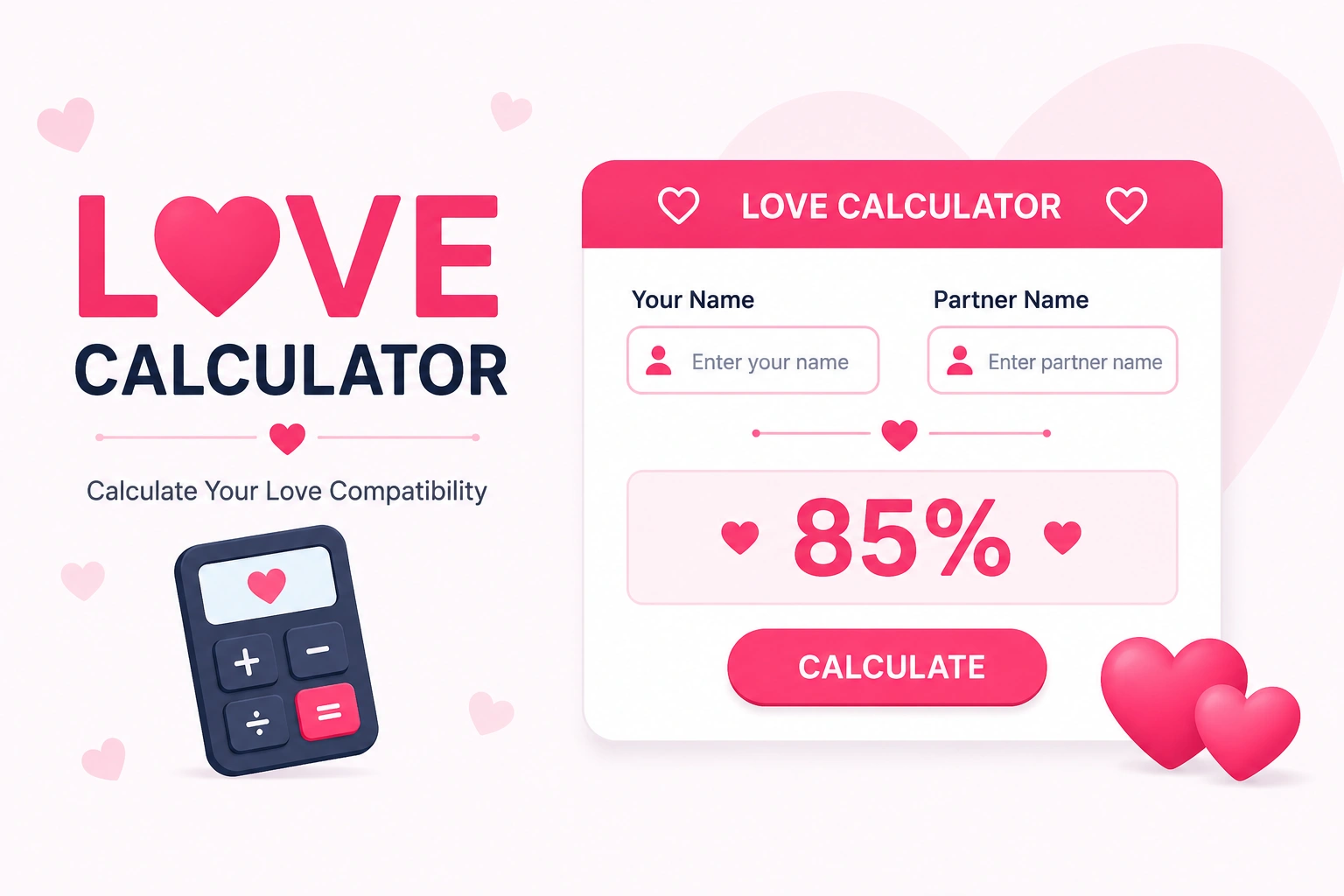
What Is a Love Calculator?
A love calculator is a fun, light-hearted tool that generates a compatibility percentage between two names. Based on a combination of letter matching, name harmony, and a hash-based algorithm, it produces a score between 1% and 99% — then maps that score to a romantic interpretation ranging from "Long Shot" all the way up to "Soulmates."
These tools have been a popular internet tradition since the early days of the web, and for good reason — they're playful, shareable, and just specific enough to feel meaningful even when everyone knows they're for entertainment. Think of it as the digital version of writing two names in a heart on a notebook: the calculator doesn't predict your future, but it's a fun way to spark a conversation about someone you like.
How to Use This Calculator
- Enter your name in the first field — use your first name, full name, or nickname
- Enter their name in the second field — the same name formats work either way
- Click "💖 Calculate Love Score" to see your result with animated hearts, a score ring, and a compatibility breakdown
- The compatibility bars show how Chemistry, Trust, Communication, Shared Goals, and Fun score for this pair
- Use the share buttons to send your result to a friend, post it on X (Twitter), or send it via WhatsApp
How the Score Is Calculated
The algorithm behind this calculator uses three components to produce a score that's deterministic (the same names always produce the same result) and symmetric (swapping name order doesn't change the score):
What Each Score Range Means
| Score | Label | Interpretation |
|---|---|---|
| 90–99% | 💍 Soulmates | A rare, near-perfect connection. The universe may have had a hand in this one. |
| 75–89% | 💖 Deep Love | Strong emotional bond. You two complement each other in meaningful ways. |
| 60–74% | 💕 Great Match | Good compatibility. With effort and communication, this could really blossom. |
| 45–59% | 💛 Friendly Vibes | Warmth is there. Worth exploring — chemistry can grow with time. |
| 30–44% | 🤔 Complicated | Mixed signals. Might work, might not — but it could be an adventure finding out. |
| 1–29% | 😅 Long Shot | Opposites can attract! Low scores don't rule anything out — they just mean more work ahead. |
Real Factors That Actually Affect Compatibility
Fun as the score is, real compatibility research points to some genuinely interesting factors. A 2021 study published in the American Psychological Association's relationship resources identifies shared values, communication quality, and emotional responsiveness as the top predictors of long-term relationship satisfaction:
- Shared values over shared interests. Couples who agree on core values (honesty, family priorities, financial goals) report higher satisfaction than those who merely share hobbies. You can find a new activity together; fundamentally different values are harder to navigate.
- Communication style compatibility. Research consistently finds that how couples handle disagreements predicts relationship longevity better than how compatible they feel during good times. The ratio of positive to negative interactions during conflict (the "magic ratio" from John Gottman's research) is 5:1 for stable couples.
- Attachment styles matter. Whether you tend toward secure, anxious, or avoidant attachment affects how you handle closeness, conflict, and need for reassurance. Two securely attached people tend to navigate challenges more smoothly.
- Similarity in a few key areas helps — but not everything. Moderate similarity in personality traits, especially openness and agreeableness, correlates with relationship satisfaction. Complete similarity, however, can reduce the spark that comes from learning something new from a partner.
Famous Couples — Fun Score Examples
Just for fun, here are some famous name pairs and what the algorithm produces for them. Remember: these scores reflect name patterns only and have nothing to do with real relationships!
| Couple | Score | Label |
|---|---|---|
| Romeo & Juliet | 64% | 💕 Great Match |
| Jack & Rose | 74% | 💕 Great Match |
| Harry & Hermione | 62% | 💕 Great Match |
| Alice & Bob | 68% | 💕 Great Match |
| Emma & Oliver | 91% | 💍 Soulmates |
| Sophia & Liam | 50% | 💛 Friendly Vibes |
Enter any of these name pairs in the calculator above and you'll get the exact same scores — the algorithm is consistent. Emma + Oliver scores 91% (Soulmates) because their names share several letters and the hash produces a high base value for this combination.
The Science of Attraction — What Research Actually Says
Attraction and compatibility have been studied extensively by psychologists, and a few findings stand out as genuinely surprising. Proximity is one — studies consistently show that people are more likely to develop feelings for those they encounter regularly, simply due to familiarity. This is the "mere exposure effect," documented by Robert Zajonc in 1968 and replicated dozens of times since.
Similarity also plays a role, but not in the way most people expect. People tend to be attracted to those who share their attitudes and values more than those who look similar or have similar hobbies. A Psychology Today overview of attraction research notes that complementary traits (where one partner's strengths offset the other's weaknesses) can be as important as similarity for long-term relationship quality.
5 Tips for a Stronger Relationship
- Tell them something specific you appreciate every day. "You're great" is forgettable. "I appreciate that you remembered to pick up coffee on your way home without being asked" is not. Specific appreciation creates genuine connection and signals that you're paying attention — which is one of the most meaningful things you can communicate to a partner.
- Handle disagreements in writing sometimes. When emotions run high, texting or writing out your perspective before a conversation gives both people time to think rather than react. It's not avoidance — it's giving the issue the calm attention it deserves. Many couples find written communication for difficult topics reduces defensiveness.
- Schedule regular check-ins, not just dates. A 20-minute weekly "relationship check-in" where you both share what's working and what's not prevents small issues from becoming large ones. Research from the Gottman Institute shows that couples who maintain regular positive interaction during low-stress times handle high-stress moments better.
- Learn their love language. Gary Chapman's framework (words of affirmation, acts of service, receiving gifts, quality time, physical touch) isn't scientifically rigorous, but it's a useful conversational shorthand. Knowing whether your partner values quality time over verbal affirmation can save years of miscommunication about why certain gestures land better than others.
- Celebrate each other's wins enthusiastically. Research by Shelly Gable at UCLA found that how a partner responds to your good news predicts relationship quality better than how they respond to your bad news. Active, enthusiastic celebration of wins builds more trust than comfort during setbacks — though both matter.
Reference: American Psychological Association — Healthy Relationships