
Construction Calculators
Brick, cement, concrete, and tile — accurate material estimates with waste factors so you order the right amount and avoid costly shortfalls or over-ordering.
All Construction Calculators (4)
Click any calculator to open it — all tools are free, instant, and require no sign-up.
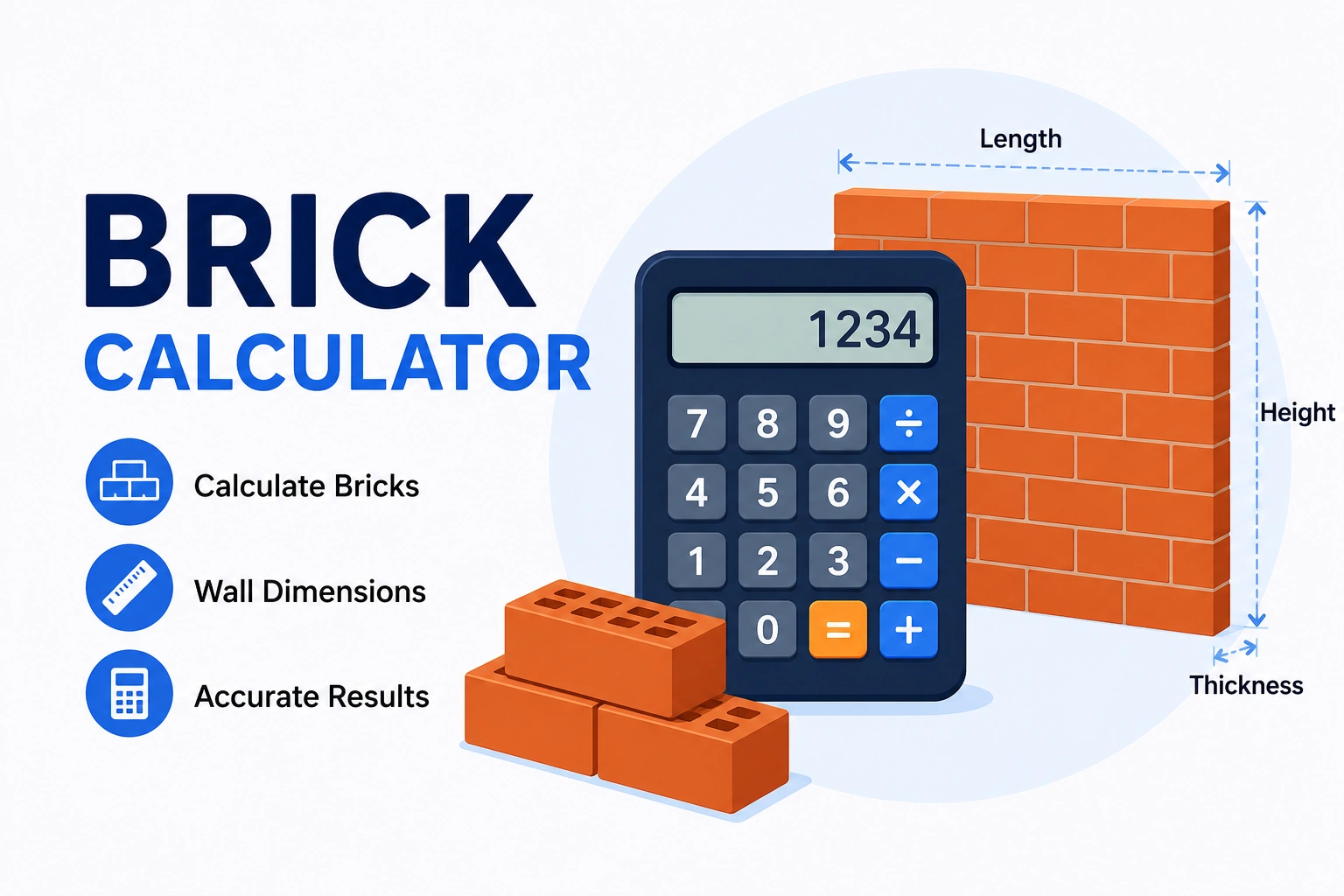
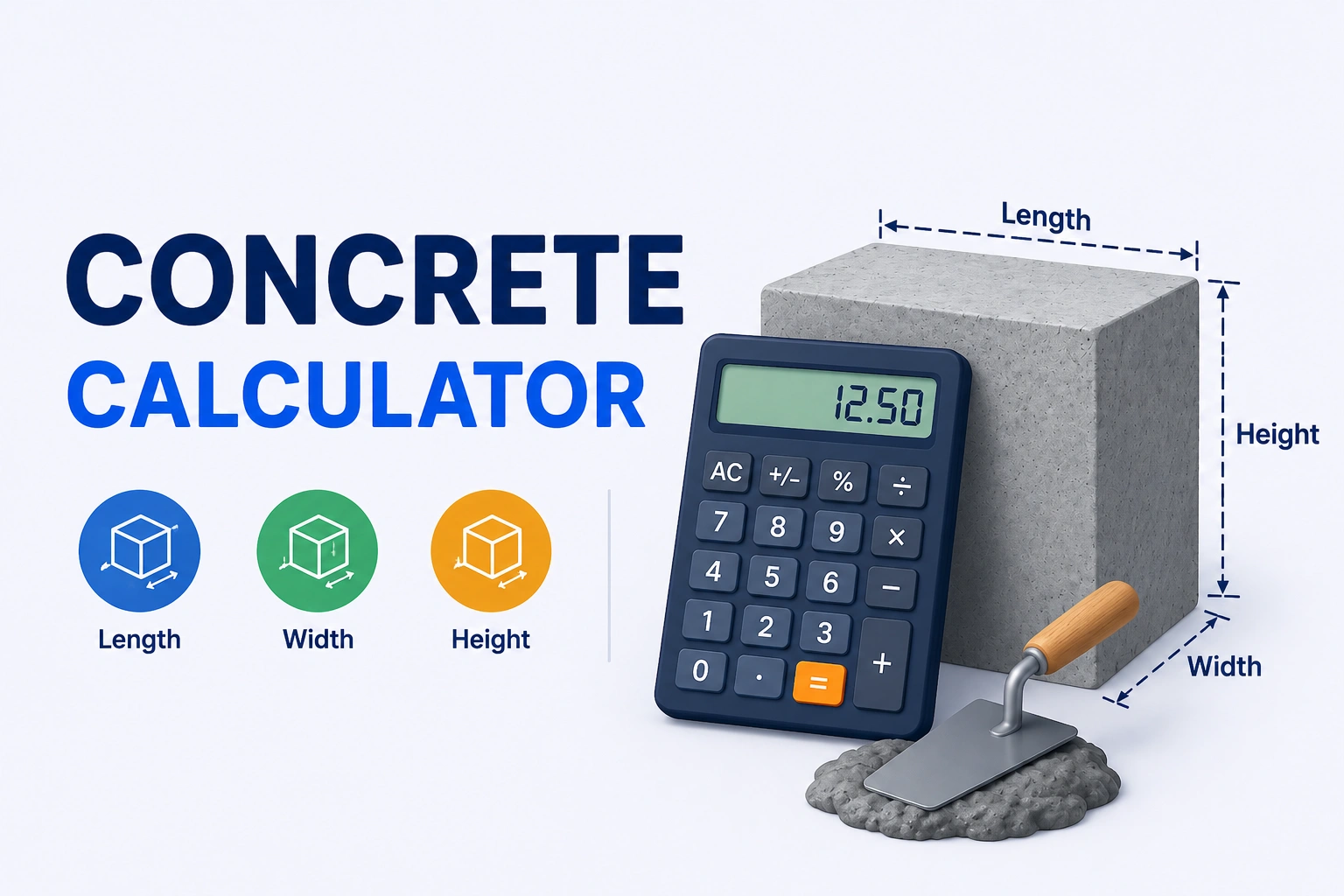
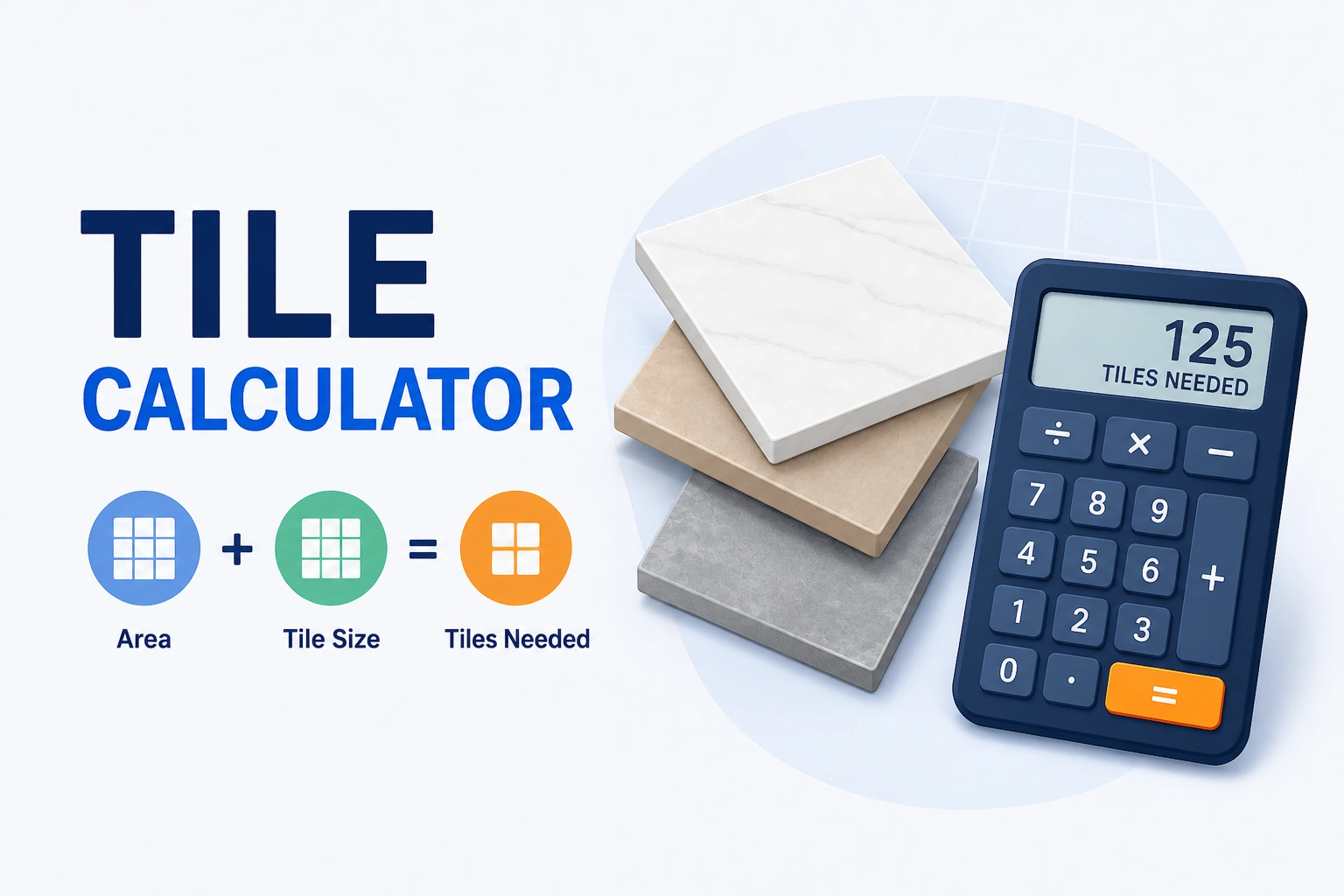
Brick Calculation — How Many Bricks Per Square Meter
Brick quantity depends on the brick size, mortar joint thickness, and whether you're calculating one brick thick (half brick wall) or full brick thickness. The standard calculation uses the nominal brick dimensions (actual size plus mortar joint) to find how many bricks cover one square meter.
Concrete Volume and Mix Ratios
Concrete volume is length × width × depth for slabs, or the appropriate geometric formula for columns and footings. The wet volume is then multiplied by 1.54 to get the dry volume needed (concrete shrinks during curing). Mix ratios determine the proportion of cement, sand, and aggregate by volume.
Cement Bags for Mortar and Plaster
Cement mortar for brickwork typically uses a 1:6 ratio (1 part cement, 6 parts sand). Plastering uses richer mixes: 1:4 for exterior and 1:5 or 1:6 for interior. The dry volume factor for mortar is 1.33 (compared to 1.54 for concrete) because mortar has no coarse aggregate and is less porous.
Tile Quantity Calculation
Tile quantity calculation starts with the area to be covered, divides by the area of one tile, then adds a waste factor for cuts at edges, corners, and breakage. Diagonal patterns and irregular rooms need higher waste factors — typically 10–15% instead of the standard 5%.
Concrete Mix Grade Reference Table
Concrete mix grades (M10 through M25 and above) specify the minimum compressive strength in N/mm² (megapascals) after 28 days of curing — the same concept expressed in PSI in the US (1 N/mm² ≈ 145 PSI). Higher grades use richer cement ratios and are used for structural elements that bear more load:
| Grade | Mix Ratio (C:S:A) | Strength (N/mm²) | Typical Use |
|---|---|---|---|
| M10 (~1,450 PSI) | 1:3:6 | 10 N/mm² | Lean concrete, blinding, non-structural fill |
| M15 (~2,200 PSI) | 1:2:4 | 15 N/mm² | General slabs, paths, mass concrete |
| M20 (~2,900 PSI) | 1:1.5:3 | 20 N/mm² | Beams, columns, slabs (most residential) |
| M25 (~3,600 PSI) | 1:1:2 | 25 N/mm² | Heavy-duty floors, water retaining structures |
| M30+ (~4,350+ PSI) | Design mix | 30+ N/mm² | Bridges, high-rise, industrial structures |
Source: American Concrete Institute (ACI) | Portland Cement Association
5 Construction Calculation Tips
- Always subtract openings before calculating bricks. Doors, windows, and ventilation openings reduce the actual brick area. A standard door opening (0.9 m × 2.1 m = 1.89 m²) at 50 bricks/m² saves 95 bricks. Not accounting for openings adds 5–15% unnecessary material cost on typical residential walls.
- The dry volume factor (1.54 for concrete, 1.33 for mortar) accounts for air voids. Dry cement, sand, and aggregate contain air gaps — when mixed with water, the particles pack together and the volume shrinks. Without this factor, you'd calculate too little dry material. For a 3.60 m³ concrete slab, the dry materials needed are 3.60 × 1.54 = 5.5440 m³ total — significantly more than the final volume.
- One bag of 50 kg cement = approximately 0.035 m³. This is the standard conversion used in all cement calculations. So for the 1:6 mortar example requiring 0.1900 m³ of cement: 0.1900 ÷ 0.035 = 5.4 bags. Always round up to whole bags — you can't buy 0.4 of a bag, and running short during plastering can cause patching inconsistencies.
- Match your concrete grade to the structural requirement. M15 (1:2:4, ~2,200 PSI) is fine for a garden path but not for a load-bearing column. M20 (1:1.5:3, ~2,900 PSI) is the commonly used minimum for residential structural concrete work. Using a weaker mix to save cost on structural elements is a false economy — repair or replacement costs far exceed the cement saving. When in doubt, use one grade higher than calculated.
- Order tiles from the same batch to avoid color variation. Tile manufacturers code batches with a shade number on the box. Even the same product line has slight color variations between production runs. Buy all tiles needed in one order, plus your waste allowance, from the same shade batch. For the 10 m × 8 m room example, ordering 40 boxes (235 tiles with 5% waste) all at once prevents the problem of finding the same shade later.